
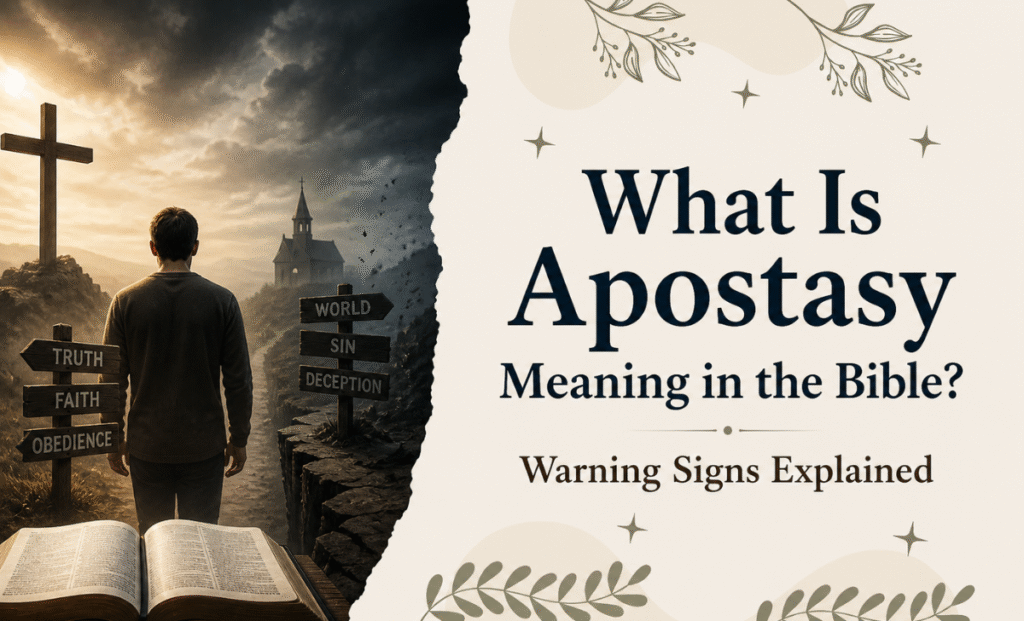
Apostasy is one of the most serious spiritual warnings found throughout Scripture. Whether you’re a new believer or a seasoned student of God’s Word, understanding the apostasy meaning in the Bible is essential for guarding your faith in an age of growing spiritual compromise. This guide unpacks every layer from its Hebrew and Greek roots to its Old Testament examples, New Testament warnings, and the 7 key signs to watch for today.
What Is Apostasy? The Biblical Definition
apostasy meaning in the bible in Christianity is the abandonment or renunciation of the Christian faith by someone who formerly professed to be a Christian. The term comes from the Greek word apostasia, meaning “rebellion,” “abandonment,” or “defection.”
The word apostasy is derived from two Greek words that together mean “to stand away from” or “to abandon” one’s faith. At its core, it means to “fall away.” The concept is so strong and emphatic that it suggests a complete breakdown of morals, ethics, and spirituality.
Put simply, apostasy is not the same as doubt, weakness, or struggling in faith. It is a deliberate, willful turning away from God after having once known Him.
Apostasy Meaning in the Bible Verse
The most cited apostasy Bible verse comes from Paul’s second letter to the Thessalonians:
“Let no man deceive you by any means: for that day shall not come, except there come a falling away first, and that man of sin be revealed, the son of perdition.” 2 Thessalonians 2:3
In the Greek text, the word apostasia appears in this verse and is translated in the KJV as “a falling away.” It signals a large-scale spiritual rebellion that must occur before the Second Coming of Christ.
Other key apostasy-related verses include:
- Hebrews 6:4–6, warns of those who tasted God’s goodness and then fell away
- 1 Timothy 4:1, predicts some will “depart from the faith” in latter times
- Matthew 24:10, Jesus says “many will fall away” during tribulation
Apostasy Meaning in the Bible KJV
Interestingly, the English word “apostasy” is not found in the King James Bible. The Greek term apostasia (Strong’s Concordance #G646) appears only twice in the New Testament once translated as “to forsake” in Acts 21:21, and once as “a falling away” in 2 Thessalonians 2:3.
So while the exact word is absent, the concept runs throughout the entire KJV Bible through equivalent phrases like “falling away,” “departed from the faith,” and “turned aside.”
What Does Apostasy Mean in Hebrew?
In the Old Testament, the Hebrew word for apostasy is meshubah (also written musba), and in the New Testament the Greek word is apostasia. The basic meaning of both words is “defection,” “rebellion,” or “a falling away.”
In Hebrew, the root word meshubah (משובה) means “turning away” or “backsliding.” Over and over, Israel is accused of walking out on Yahweh, chasing after idols and mixing truth with lies.
Hebrew and Greek Words for Apostasy at a Glance
| Word | Language | Literal Meaning | Key Usage |
|---|---|---|---|
| Meshubah | Hebrew | Backsliding / Turning away | Jeremiah 2:19; Hosea 14:4 |
| Mārad | Hebrew | Rebellion against God | Joshua 22:16 |
| Swr | Hebrew | Turned away / Ceased following | 1 Samuel 15:11 |
| Apostasia | Greek | Defection / Revolt | Acts 21:21; 2 Thess. 2:3 |
| Aphistēmi | Greek | To withdraw / Stand away from | 1 Timothy 4:1 |
Apostasy Meaning in the Old Testament
In the Old Testament, Israel repeatedly falls into apostasy through idolatry, injustice, and rejecting God’s covenant. However, God continually calls them back. Through prophets like Jeremiah, Ezekiel, and Hosea, God urges His people to repent.
The dominant image for apostasy in the Old Testament is the heart turning away from God. It centers on Israel’s breaking of the covenant relationship through disobedience to the law, especially by following other gods and practicing immorality.
The Old Testament uses four vivid pictures of apostasy:
- Rebellion: a coup against divine authority
- Turning away: abandoning the covenant path
- Falling away: going toward eternal destruction
- Adultery: spiritual unfaithfulness to God, like a spouse cheating on their partner
32 Meaning in the Bible: God’s Secret Message for You
Examples of Apostasy in the Bible
Old Testament Examples
One of the first examples of apostasy occurs in Exodus 32. While Moses ascended the mountain to receive God’s law, the Israelites built a golden calf and worshipped it even calling this idol the god who had delivered them from Egypt. This apostasy provoked God’s wrath and required Moses’ intercession.
Other notable examples include King Saul (1 Samuel 15:11), King Amaziah (2 Chronicles 25:14–27), King Solomon (1 Kings 11), Jeroboam (1 Kings 12:28–32), and Ahab alongside Jezebel (1 Kings 16:30–33).
New Testament Examples
In the New Testament, onetime followers of Jesus turned their backs on Him (John 6:66). Demas, who traveled with Paul, “because he loved this world,” deserted him (2 Timothy 4:10). Hymeneus and Alexander made shipwreck of their faith (1 Timothy 1:19–20).
Apostasy and Intercession Meaning in the Bible
Apostasy and intercession are opposite spiritual forces. Where apostasy is a turning away from God, intercession is a turning toward God on behalf of others.
When someone drifts toward apostasy, others can pray for them. Intercession is a powerful act of love. In Ezekiel 22:30, God looked for someone to “stand in the gap” that is intercession. Even Jesus intercedes for believers; Romans 8:34 shows Christ interceding for us.
In Exodus 32, this contrast is powerfully illustrated: Israel commits apostasy by worshipping the golden calf, and Moses immediately responds with intercession pleading before God on their behalf. Moses’ intercession shows that prayer can be a lifeline for those drifting away from faith.
What Does the Bible Say About Apostasy? Key Passages
The Bible speaks about apostasy with both urgency and compassion. Here is what major passages teach:
| Scripture | Key Warning |
|---|---|
| 2 Thessalonians 2:3 | Great apostasy will precede the return of Christ |
| Hebrews 6:4–6 | It is impossible to renew to repentance those who fully fall away |
| Hebrews 10:26–31 | Deliberate sin after receiving truth brings fearful judgment |
| 1 Timothy 4:1 | Some will depart from the faith, heeding deceiving spirits |
| Matthew 24:10–12 | Many will fall away as end-times pressure intensifies |
| Jude 1:3–4 | Believers must contend earnestly for the faith against apostates |
| 2 Peter 2:1–2 | False teachers will secretly introduce destructive heresies |
What Does apostasy meaning in the bible?
An apostate is an individual who commits apostasy someone who falls away from the faith. The highly regarded Kittel lexicon defines an apostate as a “rebel.” Apostates rebel against the faith they once claimed to believe. Notably, many theologians hold that a true apostate was never a genuine believer; they were a “tare among the wheat” looking like the real thing but lacking true regeneration.
The apostle John writes about apostates: they left the churches, but they never really belonged and when they left, it proved they were never truly part of the body of Christ (1 John 2:19).
Damian Name Meaning Bible: Symbolism & Truth 2026
Apostasy in Christianity The Theological Debate
The debate around apostasy has centered on the issue of salvation. Some hold that true believers may stray but never totally fall away. Others affirm that anyone who falls away was never really saved to begin with. Still others argue that believers can potentially reject God’s salvation through free will.
This debate largely falls between two camps:
- Calvinist/Reformed view: God’s elect are preserved; those who fall away were never truly saved
- Arminian view: genuine believers can lose their salvation through willful rejection of Christ
Both views agree on one point: apostasy is a serious, real, and present danger that every believer must guard against.
7 Warning Signs of Apostasy
The solemn fact is that none of us can tell the difference between the beginning of backsliding and the beginning of apostasy both look the same at first. Here are 7 biblical warning signs to watch for:
- Twisting Scripture: Reinterpreting the Bible to fit personal desires or cultural trends rather than submitting to its plain meaning
- Denying core doctrines: Rejecting the deity of Christ, bodily resurrection, or the necessity of the gospel
- Following false teachers: Being drawn to voices that water down truth or elevate personal experience over God’s Word
- Forsaking fellowship: Gradually withdrawing from church, worship, and the community of believers (Hebrews 10:25)
- Spiritual indifference: A slow, quiet cooling of passion for prayer, Scripture, and obedience
- Love of the world: Prioritizing wealth, status, pleasure, or approval over faithfulness to Christ (2 Timothy 4:10)
- Hardness of heart: A growing resistance to conviction, repentance, and the voice of the Holy Spirit
Hebrews 6:8, 12 points to the presence of “thorns and thistles the cares of this world, the deceitfulness of riches, and the desires for other things as early symptoms that choke out the Word and bear no fruit.
Examples of Apostasy in the Church Today
Barna Research found in 2023 that only 9% of American adults hold to a truly biblical worldview. Many are mixing bits of Christianity with secular ideas, creating a custom-made spirituality. This kind of doctrinal erosion creates fertile ground for apostasy.
Modern examples of apostasy in the church include:
- Prosperity gospel teaching, replacing the cross with promises of wealth
- Universalism, denying that Christ is the only way to salvation
- Moral revisionism, redefining biblical ethics to match cultural preferences
- Deconstruction movements, public rejection of faith by once-prominent Christian figures
- Syncretismm, blending Christianity with New Age, Eastern religion, or secular philosophy
Apostasy Punishment in the Bible
The judgment awaiting apostates is portrayed in Scripture as worse than any punishment prescribed under the Old Testament law, because it involves a “raging fire that will consume the enemies of God” (Hebrews 10:27). Those who resist God’s call and deliberately fall away will miss out on the coming kingdom and will not enter His rest.
However, the Bible is equally clear that God is slow to anger and desires repentance. In the Old Testament, God punishes apostasy, but it is never final repentance gave opportunity for mercy and restoration, and sometimes even greater blessing than before.
Intercession Meaning in the Bible
Intercession means standing in prayer before God on behalf of another person. It is the direct spiritual opposite of apostasy. Key intercessors in Scripture include Moses (Exodus 32), Elijah (1 Kings 18), and Jesus Himself, who “always lives to make intercession” for believers (Hebrews 7:25). When someone you love shows signs of drifting from faith, the most powerful response is intercessory prayer.
Ephod Meaning in the Bible (Hidden Truth Revealed)
Conclusion
The apostasy meaning in the Bible is clear: it is a willful, deliberate turning away from God and the truth of the gospel not a stumble, but a conscious desertion. From Israel’s idolatry in the wilderness to the warnings in Hebrews and the letters of Paul, Scripture consistently treats this as a grave spiritual danger. Yet it always pairs the warning with a call back to hope. God’s arms remain open to those who genuinely repent. If you sense spiritual drift in yourself or someone you love take it seriously, stay rooted in the Word, contend for the faith, and intercede without ceasing.
FAQs
Is the word “apostasy” in the Bible?
The exact English word “apostasy” does not appear in the KJV, but the Greek apostasia is used twice in the New Testament (Acts 21:21 and 2 Thessalonians 2:3), translated as “forsake” and “falling away.”
What does apostasy mean in Hebrew?
The Hebrew word meshubah means “backsliding” or “turning away,” and is used repeatedly in the Old Testament to describe Israel’s abandonment of God’s covenant.
What is an apostate in the Bible?
An apostate is a person who once professed faith but later deliberately rejected Christ and the core truths of the gospel not someone who struggles, but someone who consciously defects.
What are examples of apostasy in the Bible?
Key examples include the Israelites worshipping the golden calf (Exodus 32), King Solomon’s turn to idolatry (1 Kings 11), Demas abandoning Paul for the world (2 Timothy 4:10), and the disciples who walked away from Jesus in John 6:66.
What does the Bible say will happen before Christ returns?
Second Thessalonians 2:3 teaches that a great apostasy a widespread falling away from the faith must occur before the Day of the Lord and the revealing of the man of lawlessness (the Antichrist).
Can an apostate be restored?
Hebrews 6:4–6 suggests that restoring a fully hardened apostate is impossible, though most theologians clarify this refers to those whose hearts have completely and finally rejected Christ not those who stumble or doubt.
What is the difference between backsliding and apostasy?
Backsliding is a temporary spiritual decline that can be reversed through repentance. Apostasy is a complete, final rejection of faith though from the outside, early stages of both can look identical.
What is the connection between apostasy and intercession?
They are spiritual opposites: apostasy is turning away from God, while intercession is standing in prayer before God on behalf of others. Moses’ prayer after Israel’s golden calf incident (Exodus 32) is the Bible’s clearest picture of intercession meeting apostasy head-on.

Hi! I’m Jenson, the writer behind punslush.com. I craft clever puns and witty wordplay designed to entertain and inspire. Visit punslush.com for a good dose of humor and fun!