
NTM Meaning Slang: it stands for “Not Too Much” or “Nothing Much,” a casual reply people use in texts and online chats. It shows up when someone asks what’s going on, and the answer is simply… nothing much.
Three letters. Endless confusion. One tiny acronym hiding a friendly reply, a French curse word, and a finance term all at once. That’s the wild part about internet slang.
This guide breaks down NTM Meaning Slang completely. You’ll learn where it started, how it’s used on TikTok and Snapchat, why it means something totally different in France, and when it’s smart to avoid using it altogether.
What Does NTM Mean in Slang?
Let’s get straight to it, since that’s why you’re here.
In everyday English slang, NTM almost always stands for “Not Too Much” or “Nothing Much.” It’s a casual reply to the kind of question that doesn’t need a real answer — “what’s up,” “what are you doing,” “how’s it going.” Instead of typing out a full sentence, people shorten their response to three letters and move on with their day.
Here’s the basic idea in plain terms:
| Question | NTM Response | What It Really Means |
|---|---|---|
| “What’s up?” | “NTM, just chilling” | Nothing exciting is happening |
| “What are you doing?” | “NTM, watching TV” | I’m relaxed, doing something low-key |
| “You busy?” | “Nah, NTM” | I’m free, no big deal either way |
Think of NTM as the digital version of a shrug. It’s not cold, it’s not exciting — it’s just chilling, nothing special, and honestly, that’s the whole point. People don’t always want to write a paragraph explaining their afternoon. NTM lets them answer honestly without overexplaining.
It belongs to a bigger family of texting phrase shortcuts that Gen Z (and honestly, plenty of millennials too) use daily — think NM (“Not Much”), IDC (“I Don’t Care”), and TBH (“To Be Honest”). These are all part of the same internet slang toolkit: short, efficient, and built for speed.
Quick definition: NTM = a low-key, relaxed response meaning “nothing much is going on.” Used mainly in casual texting and social media.
ALSO READ: Stay Tuned Meaning: Definition, Usage, and Examples You
Where NTM Came From
Slang doesn’t appear out of nowhere — it evolves because people need faster ways to say the same old things. NTM is a textbook example.
Back in the early days of SMS, character limits actually mattered. Phones charged by the text, and typing on a numeric keypad (remember pressing “7” four times to get an “s”?) was slow and annoying. So people did what humans always do when communication is inconvenient: they shortened it.
Phrases like “not too much” and “nothing much” got trimmed down into three-letter combos, the same way “laughing out loud” became LOL and “be right back” became BRB. This wasn’t a TikTok invention — it predates the app entirely. NTM has roots in mobile messaging culture from the early 2000s, long before Snapchat streaks and TikTok duets existed.
As social apps grew — MySpace, then Facebook, then Instagram, Snapchat, and eventually TikTok — abbreviations like NTM didn’t disappear. They just found new homes. What started as a text abbreviation to save keystrokes became a full-blown piece of digital slang, baked into how an entire generation communicates online.
Here’s a rough timeline of how it spread:
- Early 2000s — NTM used mainly in SMS and instant messaging (AIM, MSN Messenger)
- Mid-2000s to 2010s — Carries over into early social apps like MySpace and Facebook chat
- 2015–2020 — Becomes a Snapchat and Instagram DM staple
- 2020–present — Fully embedded in TikTok replies, comment section culture, and captions
The pattern is simple: whenever a new online platform takes over, the same shorthand phrases just migrate with the users.
It also helps to understand why this kind of shorthand survives generation after generation. Digital communication rewards speed. A typed reply competes with a dozen other notifications for someone’s attention, so the shorter and clearer it is, the more likely it gets read and answered. NTM checks both boxes — it’s compact, and its meaning is instantly recognizable to anyone raised on mobile messaging.
There’s also a social layer to it. Using shared shorthand like NTM is a small signal that you’re fluent in the same internet culture as the person you’re talking to. It’s not just efficient — it’s a tiny marker of belonging within digital communities, the same way regional slang signals where someone grew up. Gen Z didn’t invent this behavior; they just accelerated it, thanks to platforms that reward brevity over formality.
NTM Acronym: A Quick Snapshot
Before going deeper into usage, it helps to see the NTM acronym and its core slang meaning laid out simply. Here’s the essential NTM definition in one place:
| Detail | Information |
|---|---|
| Full form (English) | Not Too Much / Nothing Much |
| Category | Text abbreviation, internet slang |
| Primary platforms | Texting, TikTok, Snapchat, Instagram |
| Tone | Neutral, casual, low-key |
| Common alternate meanings | Next Twelve Months (finance), Not To Mention, Nontuberculous Mycobacteria (medical) |
| Non-English meaning to know | Offensive French slang term, linked to Suprême NTM |
| Best used in | Casual conversation, informal chat, social messaging |
| Best avoided in | Formal communication, professional writing, mixed-language chats |
Keep this table in your back pocket. It’s essentially the cheat sheet version of everything covered in this guide.
The Other Side of NTM: Suprême NTM and the French Meaning
Here’s where things get important, and where a lot of slang guides drop the ball.
If you take NTM outside of English-speaking online chats and into French slang, the meaning changes entirely — and not in a subtle way.
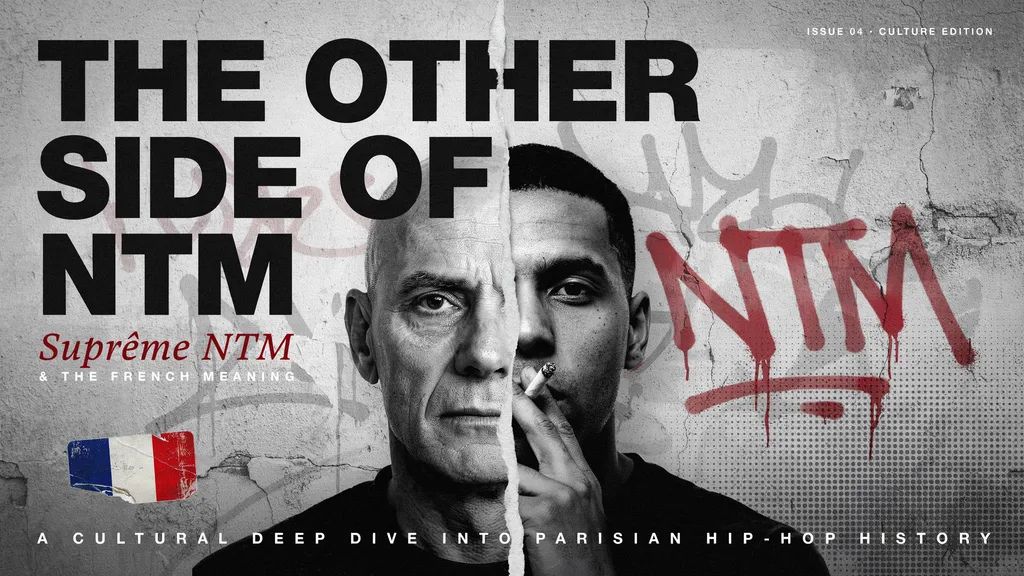
In France, NTM is widely recognized as an abbreviation tied to a vulgar French expression, one that’s considered genuinely offensive. It’s not a playful acronym over there — it’s closer to a curse. Part of why it’s so recognizable comes from Suprême NTM, a highly influential French rap group formed in the late 1980s. The group built their name directly around this French acronym, and their music helped cement it into French pop culture, for better or worse.
So while an English speaker typing “NTM, just relaxing” means something completely harmless, the exact same three letters carry serious weight in a French cultural context. It’s the kind of offensive phrase you genuinely don’t want to use around French speakers without knowing what you’re saying — even as a joke.
Real talk: This isn’t a rare or obscure fact — it’s one of the most searched questions about the acronym. “What does NTM mean in French” gets its own wave of curious searchers separate from the texting crowd.
Here’s a side-by-side to keep it clear:
| Region / Language | NTM Meaning | Tone |
|---|---|---|
| English texting / social media | Not Too Much / Nothing Much | Casual, neutral |
| French slang | Vulgar expression (linked to Suprême NTM) | Offensive, aggressive |
The takeaway is simple: context and language change everything. Same letters, completely different message. If you’re texting a friend in New York, NTM is harmless small talk. If you’re chatting with someone in Paris, it might land very differently.
How People Use NTM in Texting
Back to the friendly, everyday version. In casual conversations, NTM shows up constantly as a fast, low-effort reply. It’s built for texting, chat messages, and quick back-and-forths where nobody wants to type three sentences just to say “nothing’s going on.”
Here are some real examples of how it plays out:
- Person A: “Hey, what’s going on?” Person B: “NTM, just relaxing at home.”
- Person A: “You free tonight?” Person B: “Yeah, NTM going on, why?”
- Person A: “How’s your day?” Person B: “NTM tbh, just work stuff.”
People also stack NTM with other shorthand to add nuance. This is where the texting phrase gets a bit more expressive:
| Variation | Meaning | Vibe |
|---|---|---|
| NTMU | Not too much, you? | Passing the question back |
| NTM rn | Not too much right now | Emphasizes the present moment |
| NTM fr | Not too much, for real | Adds honesty/emphasis |
| NTM wbu | Nothing much, what about you? | Keeps conversation going |
| NTM ig | Not too much, I guess | Slightly unsure or indifferent tone |
Notice how none of these require a long explanation. That’s the whole appeal — NTM keeps everyday communication light without sounding like you’re avoiding the question. It’s no big deal, and that’s exactly the tone people are going for.
NTM on TikTok and Social Media
Texting is one thing, but NTM really took off once it hit social media, especially TikTok. The platform moves fast — videos are short, comments are quick, and nobody’s writing essays in a comment section.
On TikTok, you’ll typically see NTM pop up in two places:
- Captions — Creators post something like “NTM today, just vibing 🎶” under a video where nothing dramatic is happening. It signals a relaxed, low-key mood without over-explaining the content.
- Comments and replies — Someone comments “NTM, hbu?” under a friend’s video, essentially checking in casually within the viral content ecosystem.
This is genuinely different from texting NTM to one person. On TikTok comments, the reply is public, so tone often shifts slightly more playful or performative — people know others are reading it, not just the person they’re replying to.
Snapchat messages follow a similar pattern but lean even more casual, since snaps disappear after viewing. Because Snapchat conversations are naturally short-lived, abbreviations like NTM fit the platform’s fast, disposable communication style perfectly. You’ll see it in direct messages just as often as in chat replies.
Emojis change the read on social engagement quite a bit too:
- “NTM 😊” reads as warm and relaxed
- “NTM.” (no emoji, period at the end) can read as flat or a little distant
- “NTM 😂” often signals playful sarcasm
This is a small but important detail: on social messaging platforms, punctuation and emoji do a lot of emotional heavy lifting that plain text alone doesn’t carry.
A Quick Case Study: NTM in a Comment Section
To see how this actually plays out, picture a typical short videos post — someone filming themselves making coffee, doing absolutely nothing dramatic. The caption reads: “NTM, just my Monday morning ☕.” Within minutes, the comment section fills up with replies like “same energy,” “NTM squad,” and “living my best NTM life.”
Notice what’s happening here: NTM has stopped being just an answer to a question and started functioning as a shared mood label — almost like a mini hashtag. People aren’t literally asking “what’s up” in the comments; they’re using NTM to signal I relate to this low-key vibe and joining in on the social engagement around the post. That’s a meaningfully different job than the one it does in a one-on-one text thread, and it’s a big part of why the acronym has stuck around across so many digital chat environments.
This shift — from direct answer to shared cultural shorthand — is common across online platforms. Slang that starts as a simple reply often evolves into a broader tone-setter once enough people repeat it in public spaces like comment threads.
Does NTM Mean Something Different in Other Contexts?
Slang meanings rarely stay in one lane, and NTM is no exception. Outside of casual texting, the same three letters get recycled across totally different fields. Here’s a full breakdown so you’re never caught off guard:
| Context | NTM Meaning | Notes |
|---|---|---|
| Texting / social media | Not Too Much / Nothing Much | Most common by far |
| French slang | Vulgar expression (Suprême NTM) | Offensive, avoid outside intended use |
| Business / finance | Next Twelve Months | Used in forecasts, reports, earnings calls |
| Writing / conversation | Not To Mention | Adds emphasis to a point, often sarcastically |
| Medical field | Nontuberculous Mycobacteria | A real bacterial classification, unrelated to slang |
| Casual/rare usage | Need To Meet / Nice To Meet | Occasionally seen in intros or planning messages |
The business communication usage is worth pointing out specifically, because it’s not slang at all — it’s a legitimate abbreviation used in financial reports and forecasting. If a coworker mentions “NTM revenue,” they’re talking about projected earnings, not their weekend plans.
Same goes for the medical meaning. Nontuberculous Mycobacteria are a real group of bacteria studied in respiratory health, and doctors or researchers using “NTM” in that setting have absolutely nothing to do with texting culture.
The lesson here: always read the room. If the conversation is professional, financial, or medical, NTM is doing a completely different job than it does in your group chat.
Is NTM Rude, Sarcastic, or Just Neutral?
This is where a lot of guides oversimplify things by asking “is NTM positive or negative?” — as if slang only comes in two flavors. It doesn’t. Tone is everything here.
By default, NTM is neutral. It’s not flirty, it’s not mean, it’s not exciting. It just signals a relaxed response — nothing dramatic happening, nothing worth a full paragraph.
But here’s the nuance: the exact same three letters can shift meaning depending on what came before it.
Scenario 1 — Totally normal:
“Hey what’s up?” “NTM, just got home from work.”
This is a completely standard, friendly exchange. No hidden meaning, no attitude.
Scenario 2 — Slightly closed off:
“Are you okay?” “NTM.” “You sure?”
Here, the short reply feels a little guarded. Someone using NTM in response to a genuine, caring question — instead of a light “what’s up” — can come across as avoiding the topic. It’s not rude exactly, but it does read as a soft emotional boundary. The person isn’t inviting a deeper conversation.
Scenario 3 — Playful or sarcastic:
“NTM, just being an absolute legend today 😂”
Paired with humor or emoji, NTM can flip into something lighthearted and self-aware, almost poking fun at how understated the reply is.
The pattern is clear: tone depends on context, not the acronym itself. A one-word (or three-letter) reply carries different emotional weight depending on the question it’s answering and who’s asking it. That’s true of most short casual reply slang, honestly — it’s less about the letters and more about the moment.
There’s a psychological layer worth pausing on here too. Short replies like NTM often function as small emotional boundaries. Instead of writing out a full explanation of how someone’s actually feeling, they compress it down to almost nothing. As one frequent texter put it when describing the habit:
“Sometimes NTM isn’t about there being nothing to say. It’s that I don’t feel like unpacking it right now, and three letters says that without making it a whole thing.”
That’s a useful way to think about it. Modern slang like NTM isn’t just about saving time — it’s also about controlling how much emotional detail gets shared in a given moment. Everyday communication increasingly leans on this kind of compression, where a short phrase carries an unspoken layer underneath the literal words. Reading that layer correctly is part of what makes someone a thoughtful texter rather than just a fast one.
Here’s a simple way to gauge tone before assuming the worst (or the best):
- Look at what was asked. A light “what’s up” invites a light NTM. A caring “are you okay” deserves a bit more attention if NTM is all you get back.
- Check for punctuation. “NTM!” or “NTM 😊” reads warmer than a flat “NTM.”
- Consider your history with that person. Some friends default to short replies no matter the topic — it’s just their texting style, not a signal of anything deeper.
- Don’t over-read a single message. One short NTM rarely means much on its own; a pattern of short, closed-off replies over time is more telling than any single text.
How to Respond When Someone Texts You NTM
So someone hits you with “NTM” — now what? Here are a few natural ways to keep the conversation moving, depending on the vibe you’re going for:
- Match the energy: “Same tbh, just relaxing too”
- Keep it going: “NTM here either, wanna do something later?”
- Add a little humor: “Lol NTM squad, we should form a club”
- Show interest without pressure: “Fair enough, hope your day’s going smooth”
- If it feels distant, check in gently: “All good? You’ve been quiet”
The last one matters more than people give it credit for. If NTM shows up after a heavier question — like “are you okay” — a short, caring follow-up often works better than pushing for a longer answer right away. Respect the pace of the conversation, but don’t ignore signals either.
NTM vs. Similar Slang (NM, IDC, TBH, SMH)
NTM doesn’t exist in isolation — it’s part of a much bigger ecosystem of modern slang built for speed. Here’s how it stacks up against its closest relatives:
| Acronym | Meaning | Tone | Best Used For |
|---|---|---|---|
| NTM | Not Too Much / Nothing Much | Neutral, relaxed | Answering “what’s up” casually |
| NM | Not Much | Neutral, almost identical to NTM | Same as NTM, slightly shorter |
| IDC | I Don’t Care | Indifferent, sometimes dismissive | Expressing you have no strong opinion |
| TBH | To Be Honest | Sincere, sometimes blunt | Adding honesty before an opinion |
| SMH | Shaking My Head | Disapproval, disbelief | Reacting to something frustrating or silly |
The closest cousin here is clearly NM — the meanings are nearly identical, and honestly, most people use them interchangeably without thinking twice. IDC and TBH, though, carry more emotional charge; they’re not neutral fillers the way NTM and NM are. SMH stands apart entirely since it’s reactive rather than descriptive — it responds to something rather than describing your own state.
Knowing these differences helps you pick the right shorthand for the right moment instead of just defaulting to whatever’s most familiar.
It’s worth zooming out here too. All five of these acronyms belong to the same broader family of colloquial language that’s evolved specifically for online conversation. What they have in common is compression — taking a full sentence’s worth of meaning and squeezing it into something you can type in under a second. But they’re not interchangeable tools. NTM and NM are your go-to for describing your own low-key state. TBH and IDC lean toward expressing an opinion or attitude. SMH is purely reactive, aimed at someone else’s action or statement rather than your own situation.
Understanding this distinction is genuinely useful online vocabulary to have, especially if you’re navigating chat rooms, group chats, or messaging apps where multiple generations or language backgrounds might be mixing. Native users of this shorthand switch between these acronyms instinctively; learning the categories helps everyone else catch up faster.
ALSO READ: Snowball Kiss Meaning in Text: Understanding the Slang Term
When NOT to Use NTM
NTM is great for friendly talk and informal chat — but it has a ceiling. Knowing where that ceiling is will save you from looking unprofessional or, worse, confusing.
Avoid using NTM in:
- Formal emails — Slang has no place in professional writing, no matter how relaxed your workplace culture feels
- Workplace messaging — Even casual Slack channels benefit from clarity over shorthand, especially with people outside your immediate team
- Conversations with people unfamiliar with texting slang — Older relatives, new coworkers, or clients may not know the abbreviation at all, leading to confusion instead of connection
- International or multilingual conversations — Given the French slang meaning, using NTM casually around French speakers (or in mixed-language group chats) carries real risk of misunderstanding or offense
- Customer service or official communication — Any context requiring office etiquette should stick to full, clear language
Here’s a simple rule of thumb: if you’d hesitate to say “not too much” out loud in that exact setting, don’t type NTM either. Business communication and office etiquette generally reward clarity over cleverness, and shorthand that saves you two seconds of typing isn’t worth the confusion it might cause with the wrong audience.
On the flip side, NTM is perfectly at home in:
- Texts with friends and close contacts
- TikTok comments and captions
- Snapchat chat and direct messages
- Group chats where everyone already speaks the same digital shorthand
A Real-World Example of the Line Between Casual and Professional
Picture two nearly identical messages sent five minutes apart by the same person:
To a friend: “NTM, just finishing up some emails, wbu?” To a manager: “Not much on my end right now — happy to help if anything’s come up.”
Same underlying meaning, two completely different registers. The first fits naturally into casual conversations with people who share the same shorthand. The second respects workplace messaging norms without sounding stiff or overly formal. Neither message is “better” — they’re just calibrated for different social interaction contexts.
This is really the skill worth building: not memorizing a strict rulebook, but developing a feel for which professional conversations call for full sentences and which casual threads can handle three letters and a shrug emoji. Most people do this instinctively once they’ve been burned once by texting slang into the wrong group chat.
FAQs
What does NTM mean in slang?
NTM stands for “Not Too Much” or “Nothing Much.” It’s a casual reply used in texting and on social media to say nothing special is happening.
Is NTM still used in 2026?
Yes, it’s still common on TikTok, Snapchat, and in everyday texting, especially among Gen Z. It hasn’t faded — it’s just as active now as it was a few years ago.
Does NTM mean something offensive in French?
Yes. In French slang, NTM refers to a vulgar phrase, made widely known by the rap group Suprême NTM. It’s best avoided casually around French speakers.
Is NTM the same as NM?
Pretty much. Both mean “not much” or “nothing much” and are used the same way in casual conversations — NM is just one letter shorter.
Can NTM mean something in business or finance?
Yes. In finance, “NTM” often stands for “Next Twelve Months,” used in forecasting and earnings reports — a completely different, non-slang meaning.
conclusion
So there you have it. NTM Meaning Slang: at its core, it’s just a quick way to say “nothing much” or “not too much.” People use it in texts, on TikTok, and in casual chats every single day. It’s short, easy, and keeps conversations light.
But don’t forget the twist. NTM Meaning Slang: it changes completely in French, where it’s tied to something offensive. Context matters more than the letters themselves. Use it freely with friends. Skip it at work. And always know your audience before you type it.

Hi! I’m Jenson, the writer behind punslush.com. I craft clever puns and witty wordplay designed to entertain and inspire. Visit punslush.com for a good dose of humor and fun!